
Hey there, Iβm Jess β¨. On The Signature, I share reflections on beauty, routines, travel, wellness, culture, and everyday life. For those drawn to a calmer, more intentional way of living, I send a free newsletter each month on the 7th. You're welcome to join.
I have travelled to many corners of the globe and go back often to my favourite cities in the world. But the travels that stayed with me the longest were in Safari. I love how it allows for a slower pace with early wake ups, for permanent potholes on the road that are considered the African massage, for longing and waiting in silence for animals to appear and then only hearing your heartbeat drum in your ears when one eventually approaches.
My husband and I did a safari in mainland Tanzania during our honeymoon, which led us to the Serengeti National Park, Lake Manyara and the Ngorongoro Crater. A few years later, we did a southern Africa tour and saw animals in Namibia, Zimbabwe and Botswana.
Here are the fashion lessons I have learned from all these adventures...


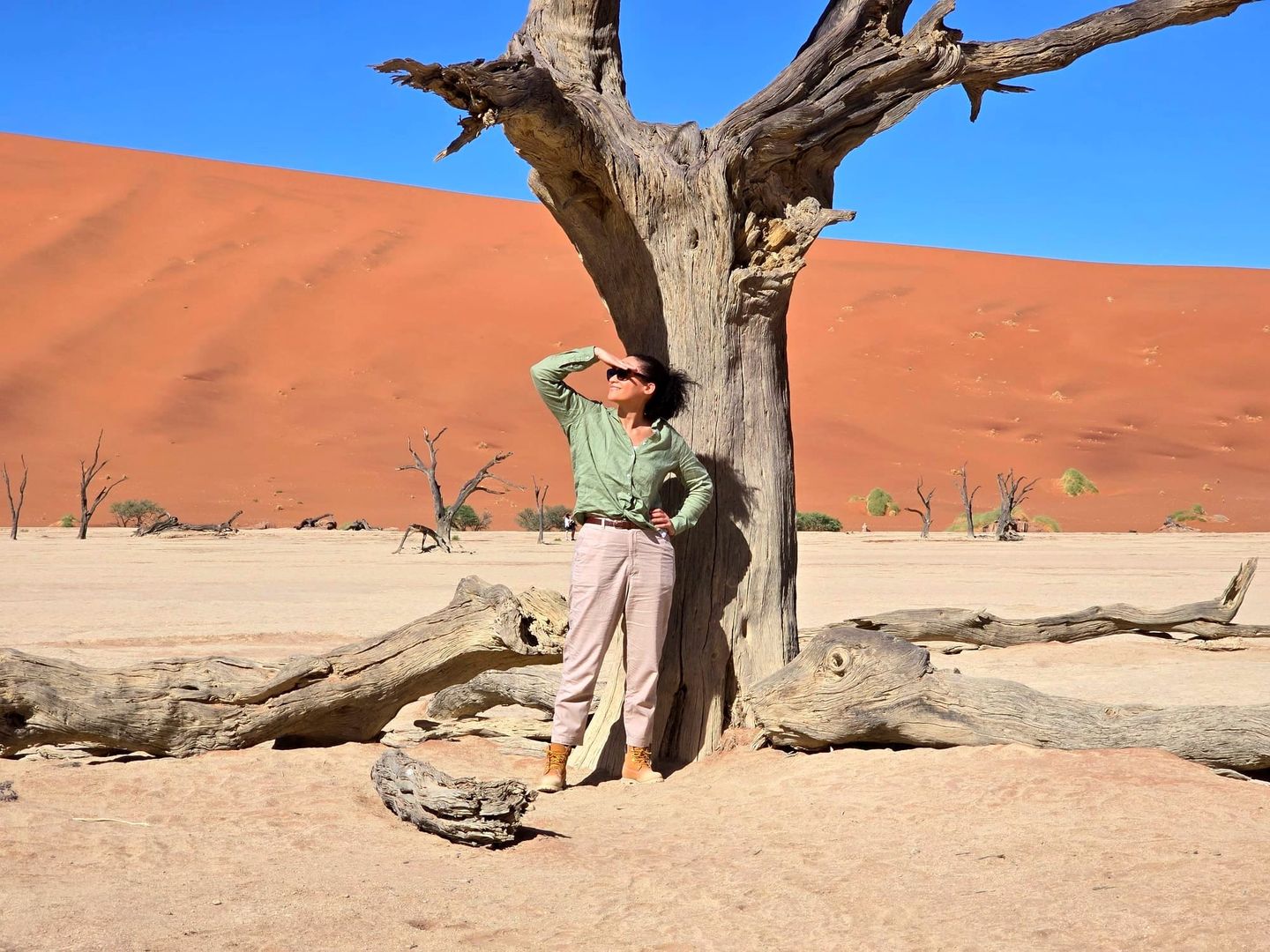
Travelling in Namibia in late October
Check your luggage allowance first
As you prepare your packing list you also have to check your luggage allowance: in sky safaris (when you hop on and off from several lodges with small airplanes), you cannot take hard-shell luggage and must choose soft ones like duffel bags. This was the case for us in Tanzania, where we took many flights between lodges and only carried duffel bags and backpacks. Also they are easier to take on safari vehicles too. Duffel bags can carry a lot of items, but be mindful that you may have less kilograms in your allowance and you will have to carry that bag yourself, most being without wheels.

Do not overpack
I only learned this when I was already in Tanzania and I left clothes behind at every lodge because... I just did not need that much. Most lodges have a same-day laundry service and you will end up using the same things every day.

My ideal packing list for 7 days in safari (considering you will be able to wash your clothes often)
- One light coat or windbreaker
- A cardigan
- A pair of shorts
- A pair of trousers
- One or two jumpsuits
- One or two dresses
- Two linen blouses
- A long-sleeved shirt
- A t-shirt or two
- Two bras or tops
- Two pairs of socks
- A pair of trainers
- A pair of hiking boots
- A pair of sandals
- A pair of flipflops
- A bathing suit
- Two sets of pajamas
- Loungewear if you don't wear pajamas out of bed like me
- Seven unmentionables
- Sunscreen and repellent
- Fitness gear if you are that kind of person
- Minimal beauty, skincare and makeup (ha! ha! ha!)
- Last but certainly not least: sunglasses and binoculars


Even my loungewear and pajamas are safari coded...
It gets cold in Africa too so you need to layer up
First of all, no matter where you are coming from, keep in mind that a Safari can be a chilly experience. You will have to go on car rides before sunrise and you might do some night walks or drives too. When there is no sun in sight and without the protection from trees and buildings, the plains can get windy and cold. So only shorts, t-shirts and sandals won't suffice. Safari is the moment to layer up and peel on or off as you go, because on the other end of the spectrum, when the sun is up, it can get scorching hot.


Light green windbreaker and scarf - Serengeti, Tanzania / Ready to tackle the evening chilly night in Namibia
Make the most of what you already have
No need to buy Safari gear you see in the movies, you can make the most of what you have. Focus on colours and fabrics that can protect you under the challenging weather, with the sun, some rain and mud splashes and the bugs. Do not wear flashy colours, dark blues and reds as these attract bugs (such as tsetse flies) and can make the animals you are longing to see never come even close. Moreover, black and other very dark colours are to be avoided as they prevent from seeing quickly if a bug is cleverly biting you.


Jumpsuits can also be a versatile idea. Be mindful of logistics when you need the loo though - Tanzania & Namibia photos


Linen dress in Namibia - Short and boots in Victoria Falls - Scarf and long trousers in Tanzania
Even if it is cloudy, wear sunscreen
It is not a piece of clothing per se, but important to pack as some safari destinations and lodges do not have a pharmacy or drugstore close by. Applying (and reapplying) sunscreen is vital as the hours of sun exposure are quite long during safari. Even if it's cloudy, yes?


Safari looks in Tanzania and in the Zambezi River
Your shoes are important too
I have walked on dusty plains, climbed into safari vehicles before sunrise, crossed muddy paths after rain and spent hours waiting during game drives. Even if they are heavy, a comfortable pair of trainers or boots will be worth more than five beautiful outfits, I promise you. You will be able to take them off at night if you are in a lodge or hotel, where you can opt for a sandal or flipflops instead.


My heavy Timberlands in action in Victoria Falls, Zimbabwe
You can look cute too, even if animals won't care
There is a major sense of freedom in doing a safari in terms of fashion. Once you understand the formula - the colours, the layers, the weather - you will understand that... none of what you are wearing matters really. You are investing in this travel to connect with nature and animals in the wild, not to have your photo taken in a fashion runway. But it does not prevent you from wanting to look cute, especially for sundowners when you can take the heavy boots off and enjoy a gorgeous meal close to a firepit.


Dinner attire by the fire in Tanzania - Sundowner with rhinos in Namibia
Safaris demand adaptability to your environment. Pack accordingly and mindfully. And get ready to adapt for all moments, for one of the greatest adventures of your life.


Simple looks for the most amazing memories
Like this content and want more? You can subscribe to get a monthly edit and we can connect also on BlueSky | TikTok | Youtube | Pinterest